Building a Stronger Search Foundation for Advixio360.
Advixio360 is a marketplace-focused digital platform where products, categories and content need to work together. My work focused on product SEO, category structure, content strategy and on-page optimisation to create a clearer foundation for organic search.
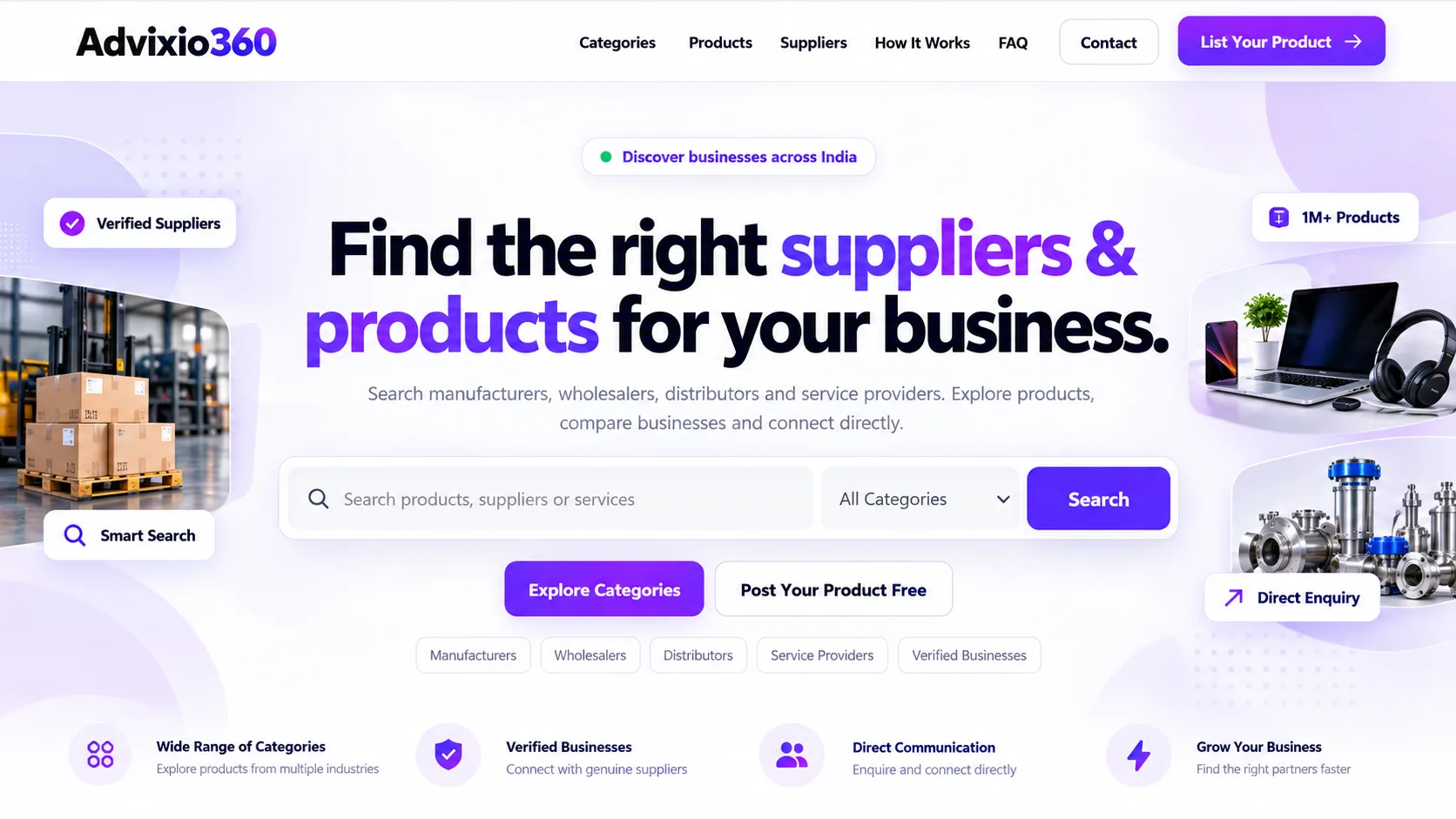
A marketplace needs an SEO structure that grows with its catalogue.
Marketplace SEO is different from a simple service website. Products, categories, filters, descriptions and supporting content can all become potential search surfaces. The project focused on creating clearer relationships between these elements.
Product SEO
Focused on making product information clearer and more search-focused.
Category Structure
Worked around category organisation and how products fit into the marketplace.
On-Page SEO
Focused on page-level relevance, content structure and search-focused optimisation.
Organic Growth
Built around creating useful foundations for long-term search visibility.
A marketplace has many pages. The real challenge is making them work together.
Product marketplaces can quickly become complex. Products belong to categories, categories relate to broader topics and users can search at very different levels of specificity.
Product-to-Category Relationships
Products need clear relationships with the categories and topics they belong to.
Useful Product Information
Product pages need useful, specific information rather than thin or repetitive descriptions.
Different Search Intent
Marketplace users can search broadly by category or specifically for an individual product.
Connecting products, categories and content into one SEO system.
The work focused on the areas that influence how marketplace pages communicate their relevance to users and search engines.
Product Content
Worked on product-focused content with attention to clarity, relevance and search intent.
Category Structure
Looked at category organisation so products can be grouped and discovered through meaningful marketplace paths.
Search-Focused Optimisation
Focused on improving page relevance around the language and intent behind product and category searches.
On-Page Content
Worked around page-level content structure and the information users need before making a product decision.
Four layers that make marketplace SEO easier to scale.
Instead of looking at every page separately, the strategy considers the marketplace as a connected system.
Discover
Understand the products, categories and search topics that form the marketplace.
Organise
Create clearer relationships between products, categories and supporting content.
Optimise
Improve page-level relevance through useful content, headings and on-page SEO.
Connect
Use internal relationships to help users and search engines move through related information.
Expand
Build supporting content around broader topics and product-related search intent.
Improve
Continue refining pages and content based on what the website and audience need.
Categories are more than folders. They can become search destinations.
A marketplace category can help users understand what is available while also creating a broader context around the products inside it.
Hub
Building clearer category relationships.
The category structure was considered from both the user-navigation and SEO perspective. A clear category system makes it easier to understand where individual products belong and how broader topics connect with specific pages.
- Clearer category-to-product relationships.
- Better context around product groups.
- More useful category-level content.
- Stronger internal pathways between related pages.
Product pages should answer the searcher's next question.
Product SEO is not just about placing a keyword on a page. A useful product page should make the product understandable, relevant and easy to evaluate.
From product information to search value.
The goal was to treat product content as a useful search asset rather than a simple catalogue entry.
- Specific product context.
- Useful and readable information.
- Search-intent alignment.
- Connections with relevant categories.
Good marketplace content starts with understanding what people want to know.
Supporting content can help a marketplace reach users earlier in the buying journey — before they are ready to search for one specific product.
Informational Intent
Answer questions users have before choosing a product, category or solution.
Commercial Intent
Create content that helps users compare options and move closer to a product decision.
Topic Expansion
Build related topics around products and categories to create a broader search footprint.
Advixio360 is part of a wider SEO approach.
Case studies should not become isolated pages. These internal links connect this project with the relevant services, insights and other work across the website.
SEO Strategy
Explore how I approach technical SEO, search intent, content and website structure as one connected strategy.
Explore SEO Strategy →Content Writing
See how content can be planned around search intent, useful information and organic visibility.
Explore Content Strategy →GEO & AEO
Learn about optimising useful content for modern search experiences and answer-driven discovery.
Explore GEO & AEO →Local SEO
Explore another part of my search strategy for businesses that need stronger location-focused visibility.
Explore Local SEO →What this project reinforced about marketplace SEO.
Marketplace SEO works best when every layer supports the next one.
Products need categories. Categories need useful context. Content needs search intent. Internal links need meaningful relationships. When these layers are connected, the website has a clearer structure for both users and search engines.
More practical SEO insights.
Explore the latest insights on SEO, content strategy, technical optimisation, search intent and organic growth.

Questions about the Advixio360 project?
The work focused on product SEO, category structure, content strategy, search intent and on-page optimisation for a marketplace-style website.
Categories can provide broader context around groups of products and help users and search engines understand how individual product pages relate to the wider marketplace.
Yes. Product-focused content and page-level optimisation were part of the work, with emphasis on clarity, relevance and search intent.
Users can search broadly for a category, compare products or look for a specific product. Understanding those different intents helps determine what each page should communicate.
No. This case study focuses on the SEO work, structure and strategy rather than publishing unverified traffic, ranking, lead or revenue figures.
Build an SEO Structure That Can Grow With Your Website.
Whether you have a marketplace, service website, content platform or growing business website, the right SEO structure can make future growth easier to build.